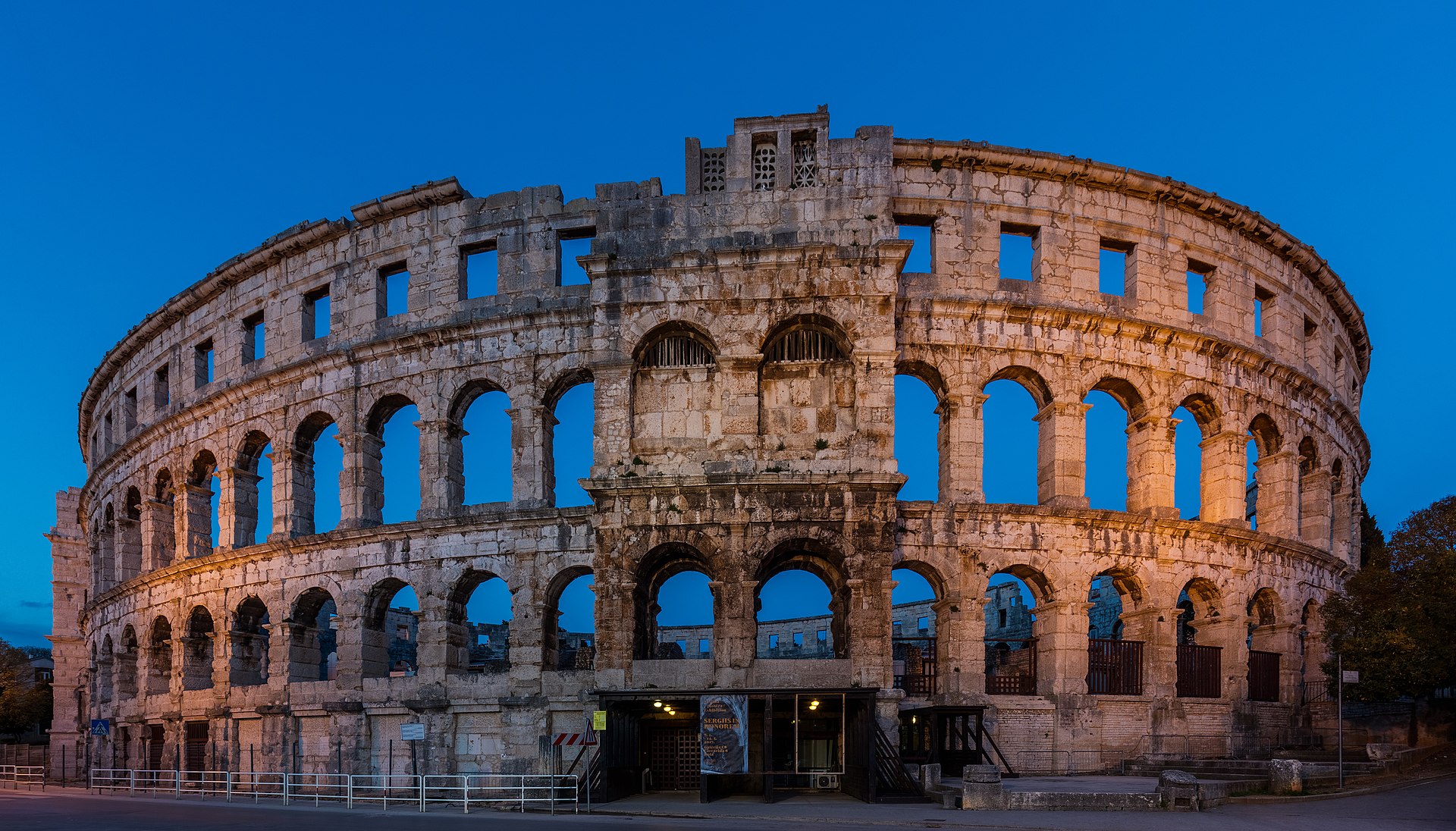
Pula is the largest city in Istria County, Croatia and the eighth largest city in the country, situated at the southern tip of the Istria peninsula, with a population of 57,460 in 2011. It is known for its multitude of ancient Roman buildings, the most famous of which is the Pula Arena, one of the best preserved Roman amphitheaters, and its beautiful sea. The city has a long tradition of wine making, fishing, shipbuilding, and tourism. It was the administrative centre of Istria from ancient Roman times until superseded by Pazin in 1991. The city lies on and beneath seven hills on the inner part of a wide gulf and a naturally well-protected port (depth up to 38 metres (125 ft)) open to the northwest with two entrances: from the sea and through Fažana channel. Today, Pula's geographical area amounts to 5,165 hectares (12,760 acres), 4,159 hectares (10,280 acres) on land and 1,015 hectares (2,510 acres) at sea, bounded from the north by islands Sv. Jerolim and Kozada, city areas Štinjan/Stignano, Veli Vrh/Monte Grande and Sianna with its 'Kaiserwald' forest; from the east area Monteserpo, Valmade, Busoler and Valdebek; from the south with the old gas works, commercial port Veruda and island Veruda; and from the west Verudela, Lungomare and Musil.
Read More >>
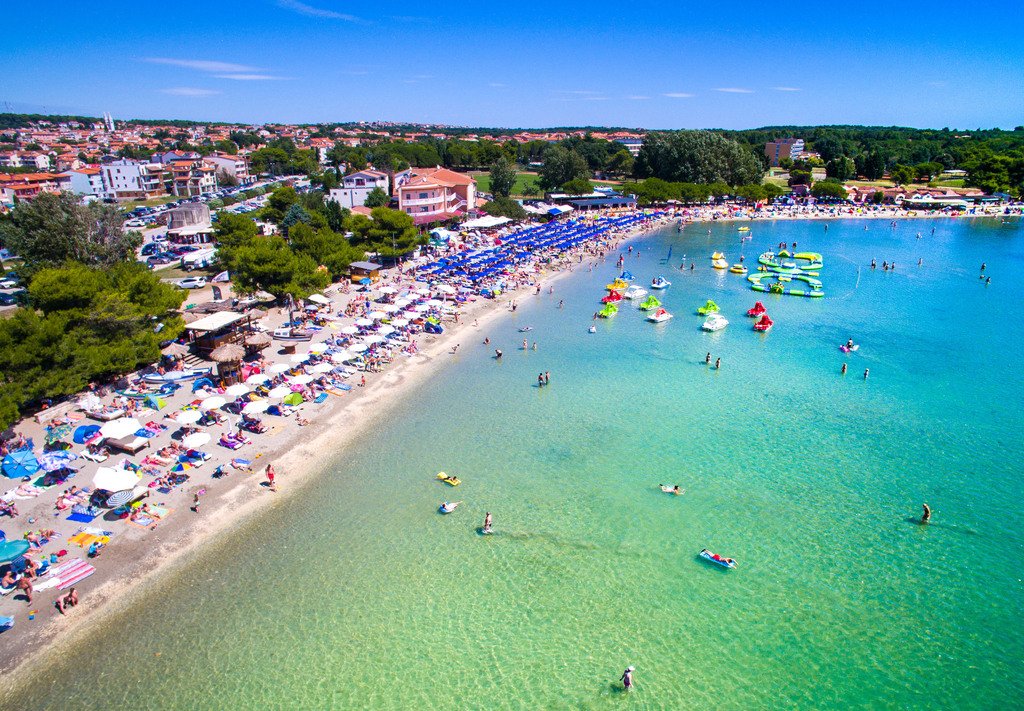
is a small town and municipality in the southern part of the Istrian peninsula in Croatia. At the 2011 census the municipality had a population of 6,481, while the settlement proper had 2,777 inhabitants. The town is built around a harbour between Cape Promontore and Capo Merlera. The town centre is to the northeast of the harbour and includes the main square and the twin-spired St Agnes Church. Medulin's economy is based on tourism. During the months of July and August, its population increases to over 10,000 due an influx of tourists that come to visit Medulin, famous for its camping sites and its coastline. As Medulin is a small town with more of an emphasis on being a holiday resort, there’s not many sights around. One of the town’s main features is St Agnes Church, with its twin bell towers (picture above). Not especially a ‘sight’, but somewhere where everyone gathers, is the town’s main promenade. Head down in the early evening and join the locals and other holidaymakers in strolling away to your heart’s content. There’s a number of restaurants, cafes and bars here, plus plenty of ice cream vendors, stall holders (selling little knick knacks) and souvenir shops.
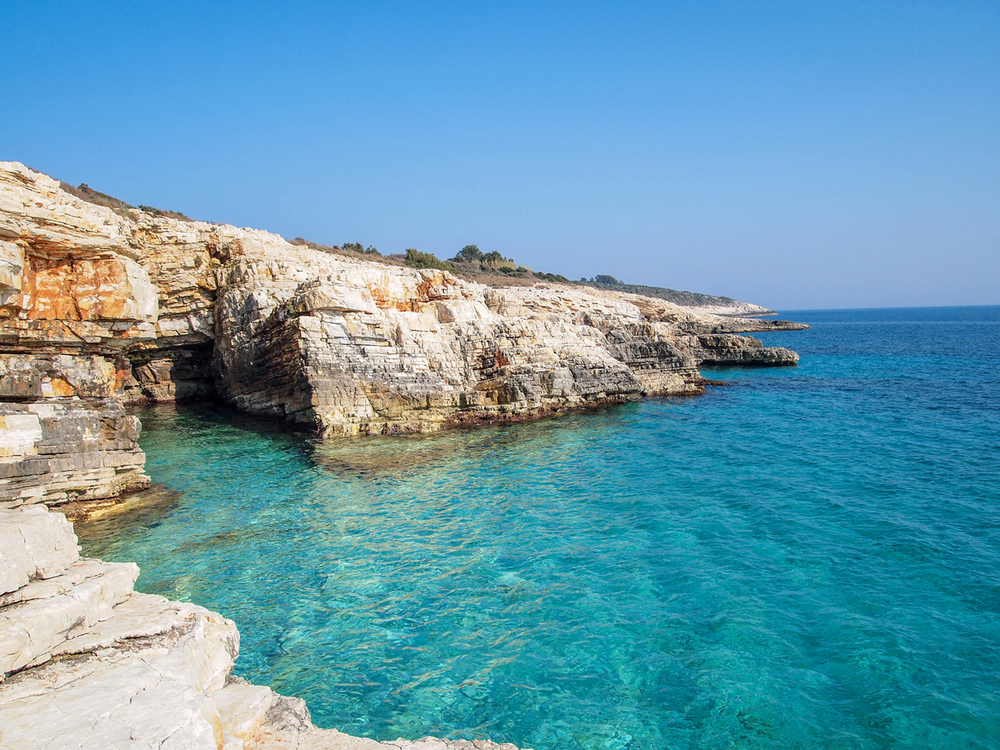
Read More >>Premantura is a small village in Istria, Croatia, on the southernmost tip Istrian Peninsula, just south of the city of Pula. A short distance from Premantura is Cape Kamenjak – a small peninsula consisting of more than 30 km of coastline with several coves and beaches. In the southernmost part of Istria (county of the Republic of Croatia), on a sliver land surrounded by the sea and perched on the top of a hill, there lies a small and ancient village. Premantura is naturally connected with the Cape Kamenjak – a small peninsula which was, due to its exceptional beauty and variety of plants and animal species, declared a protected area back in 1996. Kamenjak peninsula is 3400 m long, wide between 500-1200 m and includes 30 km of coastline, beautiful bays and beaches, many protected and endemic plant and animal species such as: endemic orchids, butterflies, Mediterranean monk seal, crabs and more.The best evidence about the ancient history of Premantura Kamenjak are the 146 dinosaur footsprints found on Kamenjak that are more than 90 million years old.
Read More >>